Home / A Year-Round Pruning Calendar: Small Jobs That Keep Trees Safe and Tidy
A Year-Round Pruning Calendar: Small Jobs That Keep Trees Safe and Tidy
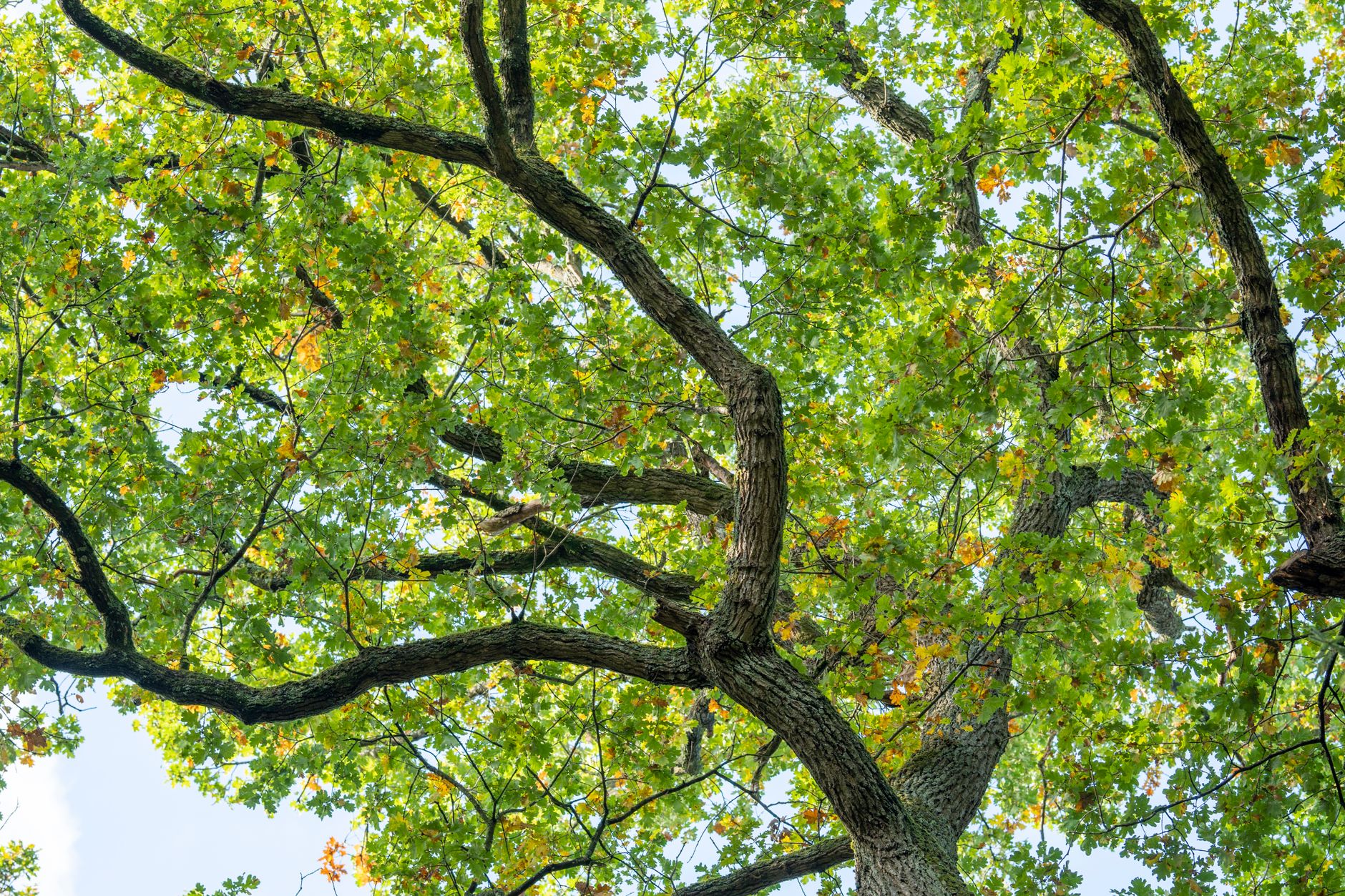
A hand saw taken down from the garage hook on a quiet afternoon does more for a tree than any emergency cut made after a storm. Pruning works best as a habit made of small, boring visits, and the trees that cause the least trouble are usually the ones somebody looked at four times a year.
This post lays out a routine you can follow around the calendar. It sorts the work into seasonal visits, a short inspection list, a few tool habits and a clear line between jobs a homeowner can handle and jobs that need a trained crew. Along the way it leans on conditions in Longview, where wet winters, dry late summers and a mix of older neighborhood trees and newer yard plantings all shape what a tree needs.
Why a routine beats a rescue
A tree responds to every cut. Each wound has to be closed by the tree's own growth, and the tree spends stored energy doing it. A few small cuts made at the right moment cost the tree very little. One big cut made late, to fix a problem that was visible for years, can cost it a great deal.
A routine also keeps you familiar with the tree. You notice the dead twig before it becomes a dead limb, the crossing branches before they rub through bark, and the lean that was not there last spring. Most expensive tree problems were cheap observations nobody made.
For the reasoning behind where to place each cut, the earlier post on this site that is worth reading about pruning explains branch collars, branch unions and why a flush cut does harm. The routine below assumes you have that background and focuses on timing and habit.
The four-visit year
Think of the year as four short visits. None of them needs to take longer than an hour for a typical yard tree.
Late winter: the structure visit
Bare branches show the frame of a deciduous tree better than any other time. Walk around the tree slowly and look for:
- Branches that cross or rub against each other.
- Limbs growing straight down or sharply back toward the trunk.
- Two strong stems competing to be the leader.
- Dead, cracked or hanging wood left over from winter wind.
- Sprouts crowding the base of the trunk.
This is the best moment for structural pruning of most species, because the tree is dormant and every cut is easy to judge. Remove only what has a clear reason. A good rule is to stop long before the tree looks different from the street.
Trees that bleed sap heavily in spring, such as maples, are often trimmed a little later, once leaves open, or in midsummer. If you are unsure about a species, wait and ask rather than cut on a guess.
Spring: the watch visit
Spring is for looking, not cutting. New leaves reveal which branches survived winter. A limb that stays bare while its neighbors leaf out is dead or dying, and you can mark it for removal.
Check for:
- Leaves that are small, pale or wilted on one side of the tree only.
- Fresh cracks where a branch meets the trunk.
- Fungus growing at the base or on the bark.
- Thin patches in the canopy that were full last year.
If you find any of these, take photos with the date and keep them. A tree's problems make far more sense when you can compare this year with last year.
Summer: the light-touch visit
Midsummer suits small corrective cuts. Water sprouts, which are the thin vertical shoots that erupt from old pruning wounds, can be snapped or clipped off while they are still soft. Low branches that droop over a walkway, a mailbox or a driveway can be shortened back to a lateral branch.
Keep the cuts few and small. A tree in leaf is making food, and removing too much canopy in hot, dry weather stresses it. In Longview, where late summer often brings long dry spells, this is also a good moment to check that the tree is getting deep watering, because a thirsty tree handles pruning badly.
Autumn: the clean-up and storm-prep visit
Autumn is the visit that pays off most. Before winter storms arrive, walk the property and look up. Dead limbs, heavy branches that overhang the roof and any limb with a visible crack should be dealt with now, while the weather is calm and the wood is dry enough to cut safely.
Also rake up fallen leaves and twigs from beneath the tree. Some diseases overwinter in leaf litter, and clearing it is one of the simplest forms of tree care there is.
A worked example: a backyard maple over five years
Picture a young maple planted near a back fence. Here is how a light routine shapes it.
- In the first winter, the owner removes one low branch that points at the fence and a sucker at the base. Nothing else.
- In the first summer, two water sprouts are snapped off by hand while they are still green.
- In the second winter, the owner chooses one clear central leader and shortens a competing stem by cutting back to a side branch.
- In the third and fourth years, the visits are nearly empty. A dead twig comes out here, a crossing branch there.
- By the fifth winter, the tree has a clean trunk, evenly spaced limbs and a canopy that clears the fence without any big cuts ever being needed.
The total work across five years is a few dozen small cuts. A neglected maple of the same age would likely need a large reduction, with big wounds, to reach the same shape.
Tools that make the routine easy
A routine only continues if the tools are pleasant to use. A short kit goes a long way:
- Bypass hand pruners for twigs and stems up to about the width of a finger.
- Loppers for slightly thicker branches, with long handles that give leverage without strain.
- A curved pruning saw for limbs too thick for loppers. It cuts on the pull stroke and leaves a smooth surface.
- A pole pruner for modest cuts above head height, used from the ground.
- Clean rags and rubbing alcohol for wiping blades between trees, or between a diseased branch and a healthy one.
Sharp blades make clean cuts, and clean cuts close faster. Wipe the tools after each visit, dry them, and put a drop of oil on moving parts. A rusty, dull tool tears bark and tempts people into rough shortcuts.
Where to draw the line
A routine does not mean everything is a do-it-yourself job. Some work belongs to a trained and insured climber, and knowing which is part of good maintenance.
Call a professional when:
- The branch is thicker than you can comfortably cut with a hand saw.
- The limb is above your head and would need a ladder to reach.
- Any part of the tree is near a power line or a service drop.
- The tree is leaning, has a split trunk or has large dead sections.
- A cut would land over a roof, a fence or a neighbor's property.
Ladders and chainsaws are a bad combination, and falling limbs behave unpredictably. Many injuries in yard work happen on exactly this kind of job. A homeowner who stays on the ground with a pole pruner and calls a crew for the rest is making the better decision.
Mistakes worth avoiding
Several habits turn a good routine into a harmful one:
- Topping. Cutting the top off a tree leaves blunt stubs, invites decay and produces weak, fast-growing shoots.
- Over-thinning. Stripping the inner branches leaves a tuft of leaves at the ends and a weak structure.
- Cutting too much at once. A tree needs most of its canopy to feed itself.
- Leaving stubs. A stub cannot seal, so it rots back toward the trunk.
- Painting every wound. Most healthy cuts close better left open to the air.
If you catch yourself reaching for a bigger saw because the small visits were skipped, that is a signal to bring in a professional rather than to push on alone.
A short logbook keeps it honest
The easiest way to keep a routine going is to write it down. A single page per tree is enough. Record the date, what was cut, what was left and anything you noticed. Over a few years the notes show growth patterns, and they make conversations with a tree professional much more useful, because you can say exactly what changed and when.
A logbook also protects the tree from over-enthusiasm. If the page says you removed four branches last winter, you will think twice before removing eight this winter.
Putting it together
Pruning is mostly attention. Four short visits, a handful of sharp tools, a notebook and the discipline to leave most of the tree alone will keep a yard tree healthy and safe for decades. The heavy, high or risky work goes to people with the training and equipment for it.
For more background on pruning, removals, storm cleanup and seasonal care, the archive at tree service longview source collects the articles in one place, so you can keep reading before you plan the next visit to your own trees.