Home / Longview Tree Service After the Build: Why a Healthy Post Oak Dies Three Years Later
Longview Tree Service After the Build: Why a Healthy Post Oak Dies Three Years Later
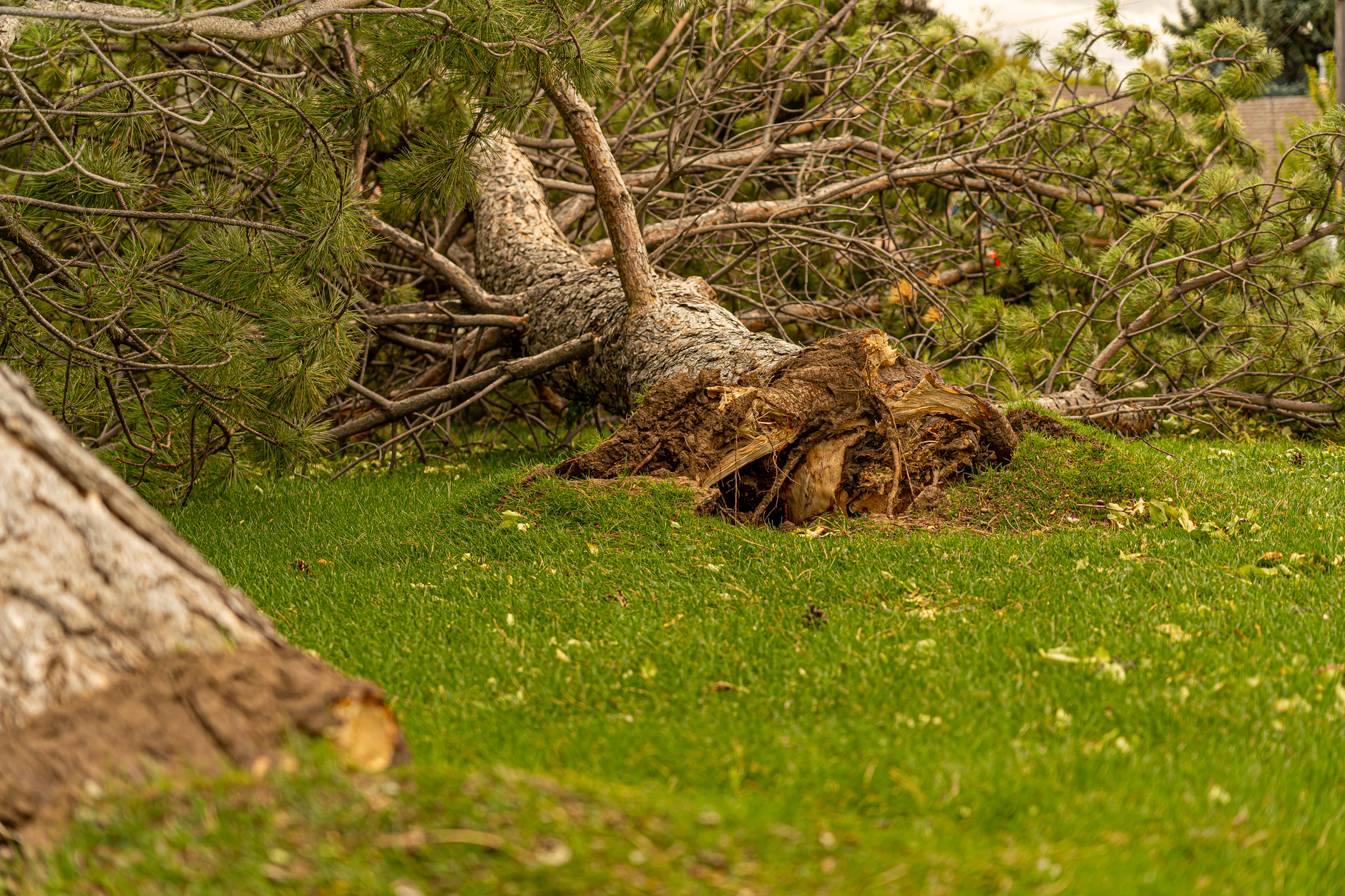
Three summers after the pool went in, the post oak at the corner of the yard is thinning from the top down. Nobody connects the two events. The concrete has cured, the fence is back up, the grass has grown over the equipment ruts, and the yard has moved on. The tree has not. It has been spending down a reserve it can no longer refill, and by the time the canopy looks wrong, the thing that caused it is two to four growing seasons in the past and no longer looks like a cause at all.
That gap is why construction kills more mature shade trees around here than disease does, and why the deaths get blamed on something else. A homeowner sees sparse leaves, early color and dieback at the tips, reads it as a pathogen or a bug, and buys a fungicide or a bag of fertilizer. None of it touches the actual injury, because the injury is in the ground and happened years ago.
A build does not wound a tree in a way anybody can point at. It removes a measurable share of the root system and compacts whatever is left, so the honest version of the conversation is arithmetic rather than diagnosis. That is the reason the crews at this local company would rather walk a lot with the site plan in hand before the forms go in than price a removal four summers later, when the only decision left is how to get the thing down over a new pool deck.
The root system is wider and shallower than the picture in your head
Most people imagine roots as a mirror image of the canopy, going down as deep as the tree is tall. Almost nothing about that is true, and every construction mistake follows from the misunderstanding.
The roots that keep a tree alive are shallow. The great majority of the absorbing roots sit in the top foot to foot and a half of soil, because that is where the oxygen is. They spread outward, commonly two to three times the radius of the canopy, so a tree with a thirty foot spread of branches may be drawing water from sixty feet out. The deep taproot people picture is mostly a nursery feature that disappears early in most species.
The working number arborists use is one foot of root zone radius for every inch of trunk diameter measured at chest height. An eighteen inch post oak is standing on a circle of soil roughly eighteen feet out in every direction, and the half of that circle nearest the house is usually the half the project wants.
Longview sits on the western edge of the Piney Woods, and a lot of these lots are red clay under a thin skin of sandy loam. Clay matters twice. It compacts easily under load, and it holds water, so roots in it are already working with less air than they would like. The loblolly pine and post oak that came with the lot grew their root systems to suit that soil as it was before the machines arrived.
Three ways a build takes roots, in rough order of how much damage they do
Compaction under equipment and material
This is the one nobody takes seriously, and it is usually the worst. Soil is not solid. A healthy soil is roughly half pore space, and that space holds the air and water roots need. Drive a loaded truck over it, stack pallets of brick on it, or park a concrete truck on it after a wet week, and the pores collapse. The ground does not look different afterward. It is simply no longer habitable.
Compaction cuts nothing. It suffocates the roots that are there and stops new ones growing into that volume. A few passes with a heavy machine do most of the available damage, which is why one delivery day can matter as much as a month of work. Relieving compaction later is possible and slow. Preventing it costs a roll of fencing.
Grade changes
Cut or fill, both are fatal in enough volume. Lowering the grade for a patio or a driveway removes the layer the roots are actually in, so a six inch cut across half a root zone takes most of the absorbing roots in that half. Raising the grade buries them under material they cannot breathe through, and fill over clay is worse than fill over sand because the water has nowhere to go.
Fill and spoil end up against the trunk for the same reason, usually because the pile was out of the way there. A buried root collar is covered on its own elsewhere, so take it as read that soil against bark is not something to accept.
Trenching through the root zone
Utilities, irrigation lines, pool plumbing, a new septic line, footing drains. A trench is a clean cut through everything in its path, and the path is usually a straight line from the street to the house, which is to say straight through the root zone of whatever stands between them.
Distance and direction decide the outcome. A trench at the outer edge of the root zone takes fine roots that regrow. A trench four feet from the trunk severs structural roots that do not regrow and that were holding the tree up. A single trench on one side is far more dangerous than scattered damage all around, because it takes the anchorage from one direction and leaves the tree standing on half a tripod. Those are the trees that come over whole in the first saturated windstorm, canopy looking perfectly healthy on the way down.
Why the decline waits two to four years
A mature tree runs on stored carbohydrate. It banks starch in the roots, trunk and branches during good seasons and draws on it to leaf out, fight off insects and seal wounds. That reserve is large enough to carry a tree through a bad year or two, which is exactly why construction damage hides.
The season after the build, the tree leafs out normally on last year's savings. It is now supplying a full canopy from a reduced and partly suffocated root system, so it runs a deficit. The first honest signal is shortened annual twig growth, which nobody measures. Then leaves get smaller. Then fall color arrives three weeks ahead of the identical tree across the street. Then branch tips start dying back and the opportunists move in: borers in a stressed pine, canker fungi on a stressed oak. The diagnosis gets attached to whatever arrived last rather than to the condition that invited it.
What an assessment after construction actually looks at
A useful post construction visit is mostly measurement, and most of it happens at ground level rather than up in the canopy.
Trunk diameter first, because that sets the size of the root zone the tree is entitled to and turns the loss into a percentage rather than an opinion. Then the map: where the trenches ran, how far from the trunk, and whether the cuts were on one side or spread around. Then the soil, probed inside and outside the disturbed area, because a probe that will not go in by hand where it went in easily last year is compaction you can feel.
Then the roots. A small excavation at the trench line with hand tools or compressed air shows whether roots were cut cleanly or torn, how big they were, and whether the cut faces are already decaying back toward the trunk. Last the canopy, read as a record rather than a symptom: shoot extension over recent years, leaf size, and where the dieback sits.
The percentage of root zone lost and the direction it was lost in carry the decision. Loss in the low tens of percent, spread around, on a vigorous tree, is usually survivable with help. Half the root zone gone on one side of a tall tree over a bedroom is a different answer and needs saying plainly.
What can still be done
Nothing puts a severed root back. The work is about making the remaining roots more productive and reducing what the tree has to support.
Decompaction is the first lever. Compressed air excavation, radial trenching and vertical mulching all do the same job differently: open channels through the compacted layer, backfill them with coarse organic material, and give roots somewhere to grow. Radial trenching runs narrow channels outward like spokes so it does not cut across what is left, and vertical mulching is a grid of augered holes filled the same way.
Mulch and water do more than either and cost less. A broad layer of coarse wood chips over the disturbed root zone, kept thin and kept off the trunk, moderates soil temperature, holds moisture and feeds soil biology as it breaks down. Deep, infrequent watering out at the drip line through dry spells carries a damaged tree through the summers while it rebuilds.
Crown reduction has a narrow but real role. Taking length off the ends of limbs lowers the leaf area the reduced root system has to supply and shortens the lever arm on a tree with compromised anchorage. It is pruning proportionate to the loss, not topping.
Fertilizer is the thing to skip. Nitrogen pushed into a tree whose constraint is root function produces soft growth those roots cannot support.
Removal is the honest answer in two cases, and both are about anchorage rather than appearance. One is a tree whose structural roots were cut close in on one side and that now stands over something that matters. The other is a tree far enough down the decline that the excavation only confirms the verdict, with no new extension growth anywhere in the canopy.
Protecting a tree before the machines arrive
All of this is cheap to avoid and expensive to fix, and the window is before the first delivery, not after.
The fence goes at the drip line or further out, never around the trunk. Fencing tight to a trunk protects bark and nothing else. A barrier at the edge of the canopy protects the soil, which is the thing at risk, and it has to be rigid enough that nobody treats it as a suggestion.
The protection plan belongs in writing, in the contract, with a drawing. It names which trees are protected, where the single access corridor runs, where material gets stacked, where the spoil and the washout go, and who pays if the fence comes down. A verbal agreement with a builder does not survive the second subcontractor.
Where a line genuinely has to cross a root zone, it can be bored under at depth rather than trenched through, for a fraction of what the tree is worth. Where a crossing cannot be avoided, roots can be cut cleanly with a saw ahead of the machine rather than torn by a bucket, and a temporary road of thick coarse mulch spreads the load enough to matter.
A post oak that shaded a Gregg County back yard for eighty years cannot be reordered, and the fencing that would have saved it costs less than an afternoon of the grinder that takes out its stump.